
Article published on 21 July 2026
Every council, school, childcare centre, developer, and landscape architect eventually asks the same question: where do you start with a commercial playground project? Between safety standards, supplier claims, cost ranges and long installation timelines, it is easy to make a decision based on the wrong information.
This guide walks through everything a first-time or experienced buyer needs to know before requesting a quote for commercial playground equipment in Australia: what the term actually means, the standards every piece of equipment must meet, how to tell a genuine manufacturer from a reseller, what happens at each stage of a project, and how to budget realistically. Proludic has designed and delivered commercial play and fitness equipment for more than 35 years, and this guide reflects what buyers get right and get caught out by, most often.
What Is Commercial Playground Equipment?
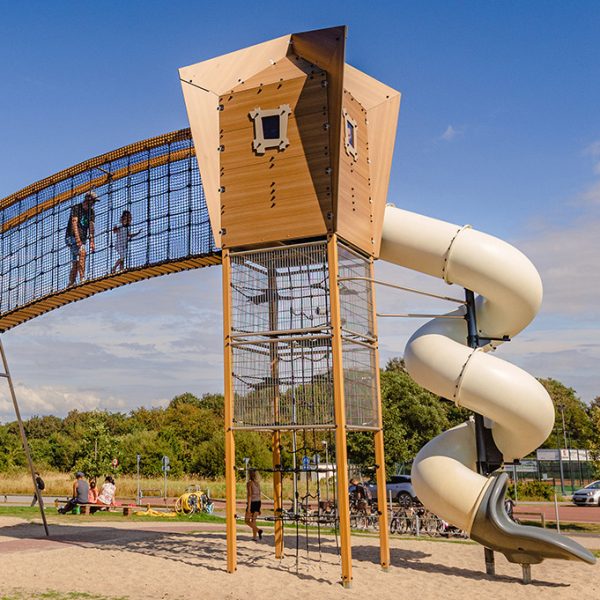
Commercial playground equipment is built for continuous, high-traffic public use rather than a single backyard. It is engineered to withstand years of largely unsupervised play from hundreds of different children a week, extreme Australian weather, and the wear that comes with constant use.
That means heavier-grade steel, UV-stabilised plastics, marine-grade fixings in coastal locations, and a level of structural testing residential equipment never has to meet. Commercial playground equipment is purchased by a wide range of organisations across Australia, including local councils upgrading public parks, schools and childcare centres building or renewing outdoor learning spaces, property developers delivering amenity for new communities, landscape architects specifying equipment for a broader park design, and tourism operators such as caravan parks and holiday resorts creating a drawcard for families.
Because the equipment sits in a public space, the supplier’s obligations do not end at delivery. Certification, warranty terms and ongoing safety compliance all become the buyer’s responsibility once the playground opens, which is why understanding the standards below matters before you compare any two quotes.
Australian Safety Standards Explained: AS 4685 and AS 4422
Every piece of commercial playground equipment sold in Australia must meet AS 4685, the Playground Equipment and Surfacing series covering design, construction, fall height, entrapment hazards and structural integrity. Ground surfacing sits under a separate standard, AS 4422, which governs impact attenuation, meaning how well the surface absorbs a fall.
These are not optional guidelines. A council, school or centre that installs non-compliant equipment carries direct liability if a child is injured, and insurers increasingly ask for documented compliance before covering a public play space.
Proludic equipment is manufactured to ISO 9001 quality certification and complies with the European EN1176 and EN16630 safety standards in addition to Australian requirements, a level of certification depth built from more than three decades of designing play and fitness equipment across international markets. When comparing suppliers, ask for the specific standard each product is certified against, not just a general statement that it is compliant.
How to Choose a Commercial Playground Equipment Supplier
Not every playground equipment company in Australia manufactures what it sells. Many operate as resellers, importing ranges from an overseas factory and adding a local sales layer. That is not necessarily a problem, but it changes what you should ask before committing to a quote.
Start with these questions:
- Does the supplier design and manufacture its own equipment, or resell another company’s range?
- What certifications does the specific product carry, and can they provide documentation?
- Does the supplier install and maintain equipment nationally, or only in one state?
- What happens if a part needs replacing in five or ten years? Is the range still in production?
- Can they show completed projects of a similar scale and sector to yours?
- Is after-sales support handled in-house, or outsourced to a third party?
A supplier that manufactures, designs, installs and maintains its own equipment in-house, rather than coordinating a chain of subcontractors, gives a buyer one point of accountability for the life of the playground rather than several parties to chase when something goes wrong.
From Concept to Completion: The Six Stages of a Playground Project
A commercial playground project moves through six broad stages, and knowing what happens at each one helps you set a realistic timeline before you commit.
1. Design and consultation
The supplier assesses the site, discusses budget and user needs, and develops a concept design, often alongside community or stakeholder consultation for public projects.
2. Manufacturing
Once a design is approved, equipment is manufactured to order rather than pulled from generic stock, particularly for custom or themed installations.
3. Project management
A dedicated project manager coordinates delivery timing, site access, and any civil works needed before installation, such as excavation or drainage.
4. Installation
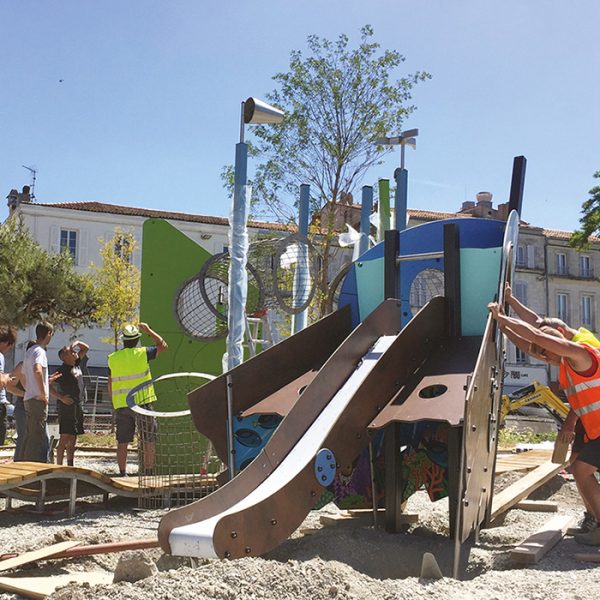
Qualified installers assemble and anchor the equipment on site, followed by surfacing works and a compliance inspection before handover.
5. Maintenance
Ongoing servicing keeps equipment within its certified safety parameters and extends its working life well beyond the warranty period.
6. After-sales support
Access to spare parts, an owner’s manual and a responsive support line for the life of the equipment, not just the first 12 months.
Buyers who understand these six stages upfront are far less likely to be caught out by delays, since most timeline blowouts happen at the handoff points between design, manufacturing and site works, particularly when multiple separate companies are involved.
Types of Commercial Playground Equipment Compared
Commercial playground ranges generally fall into a few broad categories, and most sites use a mix rather than a single type.
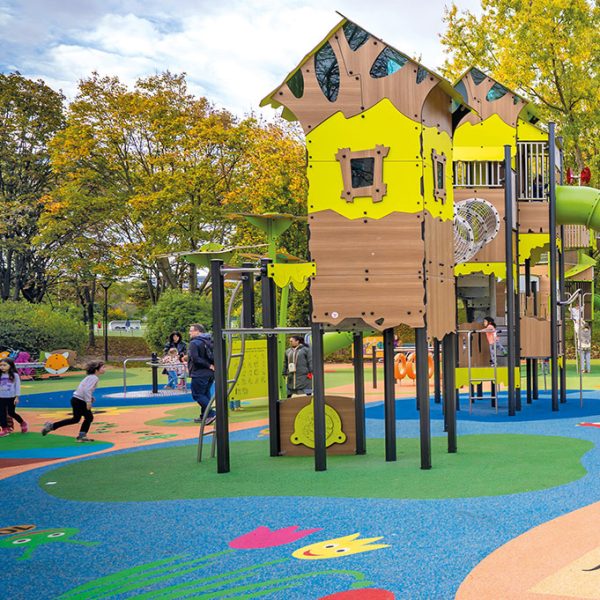
Multiplay equipment combines several play activities, climbing, sliding and balancing, into one connected structure, making it the most space-efficient option for sites with a fixed footprint.
Sustainable natural wood equipment uses timber and natural materials for a lower visual and environmental footprint, popular in parks and reserves where a playground needs to sit comfortably within a bushland or heritage setting.
Traditional equipment covers the classics: swings, slides and playhouses, still core to most playground briefs regardless of theme.
Moving equipment, springers, rotating equipment and cableways add a different kind of physical challenge and is often used to extend the age range a playground appeals to.
Themed equipment builds an entire play experience around a concept, adventure, aquatic, city or medieval themes, for example, and works well for destination playgrounds intended to draw visitors from outside the immediate area.
Climbing and balancing equipment, including rope structures and trampolines, targets gross motor development and appeals strongly to older primary and secondary-aged children who have outgrown standard play structures.
Educational and sensory equipment, sand play, water play, musical panels and interactive games, supports early learning outcomes and is a priority inclusion for childcare and early learning briefs.
A good supplier will help combine these categories against your budget and user profile, rather than defaulting to a single generic package.
What Does Commercial Playground Equipment Cost in Australia?
Pricing depends heavily on site size, surfacing type, equipment mix and any accessibility features, which is why quotes vary so widely between projects. As a general guide, small community updates typically start under $20,000, standard school or childcare installations usually fall between $20,000 and $50,000, and larger destination or regional playgrounds can run well beyond that once themed elements, extensive surfacing and civil works are included.
These figures are a starting point only. For a full breakdown of what drives playground pricing and how to budget accurately, see our dedicated guide to commercial playground equipment costs.
A Buyer’s Checklist Before You Request a Quote
Before contacting suppliers, gather answers to the following so you receive accurate, comparable quotes:
- Site dimensions and any access constraints for delivery and installation
- The age range and expected number of users
- Budget range, including whether surfacing and site works are included or separate
- Any accessibility or inclusion requirements
- Preferred installation window, particularly around school terms or peak tourist season
- Who will manage ongoing maintenance and inspections once installed
- Whether the project requires community consultation or council or tender sign-off
Having this information ready before your first supplier conversation shortens the quoting process significantly and makes it far easier to compare proposals on a like-for-like basis.
Frequently Asked Questions
Commercial playground equipment must comply with AS 4685, the Australian playground equipment and surfacing standard covering design, construction and fall safety, while ground surfacing must separately meet AS 4422 for impact attenuation.
Most projects take between three and six months from initial design approval to handover, depending on whether equipment is manufactured to order, the scale of civil works required, and site access constraints.
A manufacturer designs, engineers and produces its own equipment in-house and typically offers stronger long-term parts availability and accountability, while a reseller distributes another company’s range and relies on that company for warranty and replacement parts.
Costs typically range from under $20,000 for a small community update to $20,000 to $50,000 for a standard school or childcare project, and upwards of $100,000 for larger destination playgrounds, depending on equipment mix and surfacing.
Yes. Inclusive playground design incorporates step-free access, ground-level and elevated play options, and sensory-rich equipment so children of all abilities can play side by side, guided by standards such as AS 1428.1 alongside AS 4685.
Ready to Start Your Project?
Proludic has designed, manufactured and installed commercial playground equipment for more than 35 years, backed by ISO 9001 certification and compliance with Australian and European safety standards. If you are planning a playground project, request a free consultation and quote, and our team will help you scope the right equipment for your site, budget and community.
More Tips from Experts
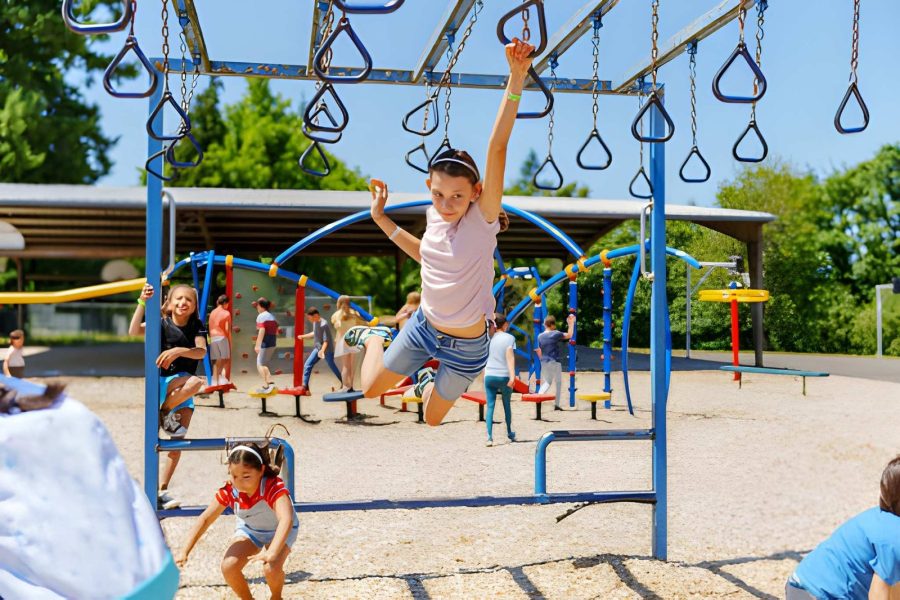
Playground Equipment Maintenance and Safety Inspections: An Australian Council’s Guide to Compliance
Article published on 17 September 2026
Somewhere on your council’s books right now sits a playground that was signed off five, ten, maybe fifteen years ago, and nobody’s given it a second thought since the ribbon was cut. That’s the problem. Sun, salt air, tree roots, and thousands of small hands and feet have been quietly working against it every single...
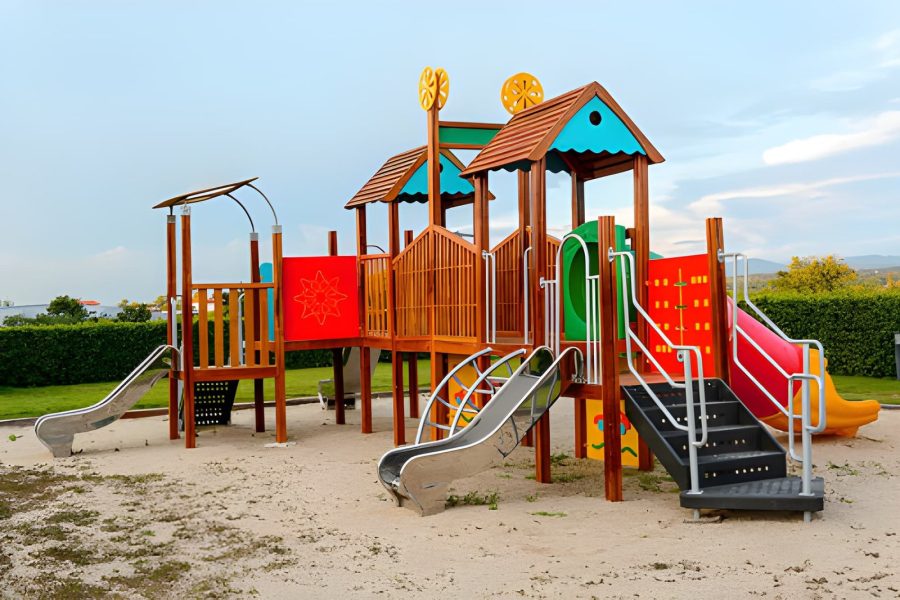
Playgrounds for Caravan Parks and Holiday Resorts: How to Choose Equipment That Survives Peak Season
Article published on 17 September 2026
A council playground has it easy, honestly. It sees the same familiar crowd of local families week after week, and kids who treat the equipment roughly the way they’d treat their own backyard gear, spread out fairly evenly across the whole year. A caravan park or holiday resort playground lives a completely different life. It...


