
Article published on 21 July 2026
Buying playground equipment is rarely part of a principal’s or P&C committee member’s training, yet it is often a significant decision made under time pressure, with a school community watching closely. Between compliance obligations, competing funding sources and a school calendar that leaves narrow installation windows, the process trips up even experienced business managers.
This guide sets out what principals, business managers and P&C committees actually need to know before requesting a quote: realistic budgets, how to plan for different age groups on one site, what compliance responsibilities land with the school once equipment is installed, and how to evaluate a supplier without needing to become a playground expert yourself.
Why School Playgrounds Are a Different Buying Decision
A school playground is used by hundreds of children every single day, often with less direct supervision per child than a childcare centre and less occasional use than a typical council park. That combination of intensity and consistency means equipment needs to be built to a genuinely commercial standard, not a scaled-up version of a backyard set.
The decision-making process is also different. Rather than a single procurement officer, school projects are usually driven by a principal, business manager or P&C committee working with a fixed and often multi-sourced budget, frequently under time pressure to have work finished before a specific term or event. Getting the brief right early avoids a project stalling halfway through for lack of funds or the wrong equipment mix being chosen for the site.
What Do Schools Actually Spend on Playground Equipment?
Budgets vary significantly by project scope. A smaller equipment refresh or addition to an existing play space often sits under $20,000, while a standard full playground replacement for a primary school typically falls between $20,000 and $50,000. Larger projects, particularly those combining play and outdoor fitness equipment across a whole school site, can run higher again.
Funding usually comes from a mix of sources: the school’s capital works budget, P&C fundraising, and in many states, government capital grant programs. Committees planning a project should confirm early which funding streams are available and whether the project can be staged, since most suppliers can sequence a project in phases if the full budget is not available upfront.
For detailed price bands and what is typically included in a playground quote, see our commercial playground equipment cost guide.
Matching Equipment to Age Bands on One School Site
Most schools need to serve several age groups from a single playground budget, and this is where briefs often go wrong. Equipment suited to early primary students, typically five to eight years, needs lower platform heights, enclosed climbing structures and softer physical challenges, while upper primary students, nine to twelve years, are ready for more demanding climbing, balancing and moving equipment.
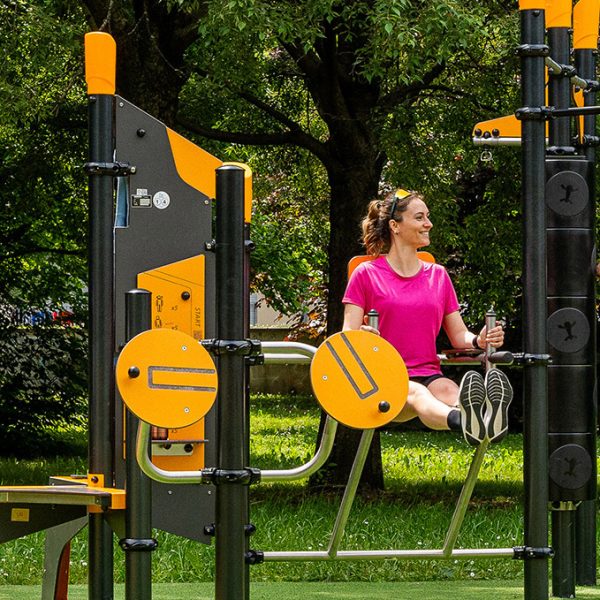
Secondary schools face a different challenge again: students in this age group often disengage from traditional play equipment altogether, which is why many secondary and K-12 sites are now adding outdoor fitness or ninja-style obstacle equipment instead of, or alongside, conventional playgrounds. Zoning a single site by age group, with clear sightlines between zones for supervision, lets one project serve the whole school rather than compromising on a single generic solution.
Compliance Obligations Schools Are Responsible For
Once playground equipment is installed, the school becomes responsible for its ongoing compliance, not just the supplier at the point of sale. Equipment must be installed to meet AS 4685 fall height and structural requirements, with surfacing meeting AS 4422 for impact attenuation across the full fall zone.
From that point, the school carries an ongoing work health and safety obligation to inspect the equipment regularly: routine visual checks, commonly daily or weekly, periodic operational inspections, and a comprehensive annual inspection, usually carried out by a qualified third party. Keeping a simple inspection register and filing it with other WHS documentation protects the school if an incident is ever reviewed. A reputable supplier should be able to explain this inspection framework clearly and, ideally, offer an ongoing maintenance service so the school is not left to manage it alone.
Timing a Project Around the School Calendar
Playground installation almost always needs to happen while students are away, which narrows the available windows to term breaks, and realistically to the longer breaks over summer and mid-year. Because commercial equipment is frequently manufactured to order rather than held as generic stock, lead times of eight to twelve weeks between order confirmation and delivery are common, meaning a project targeted for the January school return often needs to be confirmed with a supplier by the previous term.
Building this lead time into your planning, and confirming it directly with your chosen supplier rather than assuming a fast turnaround, is one of the most common gaps between a committee’s expectations and what is realistically achievable.
Manufacturer vs General Contractor: How the Procurement Process Works
Schools can buy playground equipment either directly from a manufacturer or through a general contractor coordinating several subcontractors on the school’s behalf. Going direct to a manufacturer that also handles design, installation and after-sales support in-house generally means one point of contact and accountability for the life of the project, which matters when a school does not have a dedicated facilities team to chase down issues later.
Many states also have capital works or preferred supplier panels that schools can purchase through, which can simplify the approvals process. It is worth checking with your school’s regional office or business services team whether your state has such a panel before going to open market, since it can shorten procurement timelines considerably.
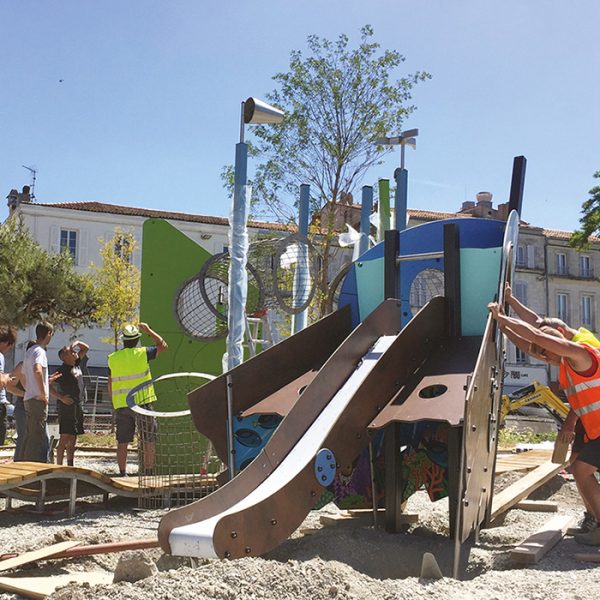
A typical process runs: initial enquiry and site visit, concept design and quote, order confirmation and manufacturing, installation during a scheduled break, and handover with an owner’s manual and maintenance plan.
A Vendor Evaluation Checklist for School Committees
Use the following to compare suppliers on a like-for-like basis rather than on price alone:
- Does the supplier manufacture its own equipment, and can they provide compliance certification for the specific products quoted?
- Have they delivered projects at other schools of a similar size, and can they provide references?
- Can they confirm an installation date within a school holiday window, in writing?
- What warranty period applies, and what does it cover?
- Do they offer an ongoing maintenance and inspection service, or does that responsibility sit entirely with the school afterwards?
- Is the quote itemised, showing equipment, surfacing, freight and installation separately, so it can be compared against other quotes?
A supplier who answers all of these clearly and in writing, before you sign anything, is a strong sign they will still be easy to deal with two or three years after installation, which is when most of the good and bad supplier decisions actually show themselves.
Frequently Asked Questions
A smaller update typically costs under $20,000, a standard full playground for a primary school usually falls between $20,000 and $50,000, and larger combined play and fitness projects can cost more depending on site size and equipment mix.
Once installed, the school is responsible for ongoing inspections, including routine visual checks and an annual comprehensive inspection, though many suppliers offer a maintenance service to manage this on the school’s behalf.
Installation itself is usually completed within a single school holiday period, but manufacturing lead times of eight to twelve weeks mean the project needs to be confirmed with a supplier at least one full term before the planned installation window.
Yes, P&C fundraising is a common funding source for school playgrounds and is often combined with the school’s capital works budget or a state government grant to cover a full project.
A K-6 school generally needs two distinct zones, lower platform and enclosed climbing equipment suited to early primary students, and more demanding climbing, balancing and moving equipment for upper primary students, rather than a single set of equipment for the whole school.
Ready to Plan Your School’s Project?
Proludic works directly with schools across Australia, from initial concept through to installation and ongoing maintenance, with equipment manufactured to Australian and international safety standards. Request a free quote and one of our play consultants will help your committee plan a project that fits your budget, age groups and school calendar.
More Tips from Experts
Playground Equipment Maintenance and Safety Inspections: An Australian Council’s Guide to Compliance
Article published on 17 September 2026
Somewhere on your council’s books right now sits a playground that was signed off five, ten, maybe fifteen years ago, and nobody’s given it a second thought since the ribbon was cut. That’s the problem. Sun, salt air, tree roots, and thousands of small hands and feet have been quietly working against it every single...
Playgrounds for Caravan Parks and Holiday Resorts: How to Choose Equipment That Survives Peak Season
Article published on 17 September 2026
A council playground has it easy, honestly. It sees the same familiar crowd of local families week after week, and kids who treat the equipment roughly the way they’d treat their own backyard gear, spread out fairly evenly across the whole year. A caravan park or holiday resort playground lives a completely different life. It...


