
Article published on 1 September 2026
Drive past enough council parks and you’ll notice the same thing: a brand-new outdoor gym sitting empty while the playground right next to it is full of families. That’s almost never a product problem. It usually comes down to a public fitness area being chosen and specified without much thought for how people will actually use it.
This guide is for council officers and staff planning an outdoor fitness installation, whether that’s a single fitness pod in an existing park or a full community fitness precinct. Rather than working through a specification sheet, it focuses on the planning decisions that determine whether outdoor fitness equipment for councils gets used every day or sits idle, and what separates useful public fitness equipment from equipment nobody bothers with.
Why So Many Public Gyms Sit Empty
An unused outdoor gym is rarely a product issue. In most cases it’s a location issue: the equipment ends up in whatever corner of the park happened to be free, rather than where people actually walk, sit and socialise.
Sport and Recreation Victoria’s guidelines on planning outdoor fitness equipment point to a consistent set of site factors behind whether equipment gets used, and the first step in any project is understanding your users and their needs before you even start selecting equipment.
Before locking in a location, it’s worth checking each of these:
- Foot traffic: is the site on or next to a path people already walk or cycle, rather than tucked away from one?
- Passive surveillance: can the equipment be seen from a nearby road, path or building, so people feel safe using it alone after hours?
- Co-location: is it close to a playground, sports field, dog park or café, so a workout can fit naturally into a family outing?
- Shelter from the elements: can it still be used comfortably in peak summer heat, not just in the milder months?
- Site amenities: is there parking, water, seating and toilets nearby?
- Level, accessible ground: is the surface flat and firm enough for a pram, wheelchair or other mobility aid to reach every station?
Get these right and usage tends to follow naturally. Get the site wrong and even the best equipment on the market will sit unused. It’s the same story whether the park is a general community space or a dedicated training precinct.
Equipment Mix: Mixed-Ability Community Use vs a Fitness-Only Crowd
No two outdoor fitness projects have quite the same brief, which is why the equipment mix needs to match the site. When planning park gym equipment, councils should think about who will use the space, how often, and the range of abilities it needs to support.
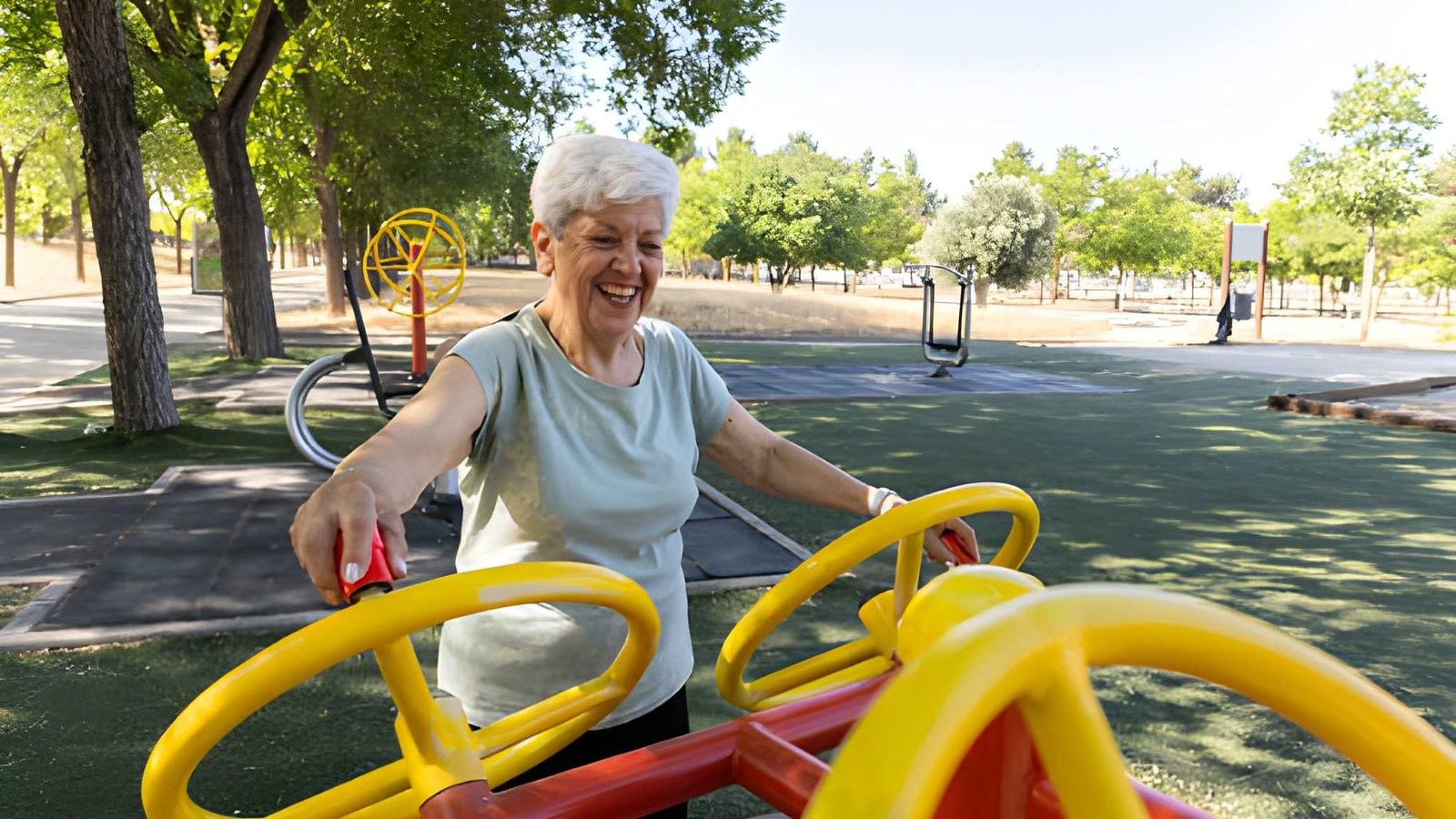
In a neighbourhood park serving a broad mix of people, such as children, older residents, teenagers and wheelchair users, the right mix leans toward accessible, lower-intensity equipment: adjustable resistance stations, balance and coordination equipment, seated or supported cardio options, and combination units that let a wheelchair user work out alongside someone standing. The goal is participation from as many people as possible, regardless of age or ability.
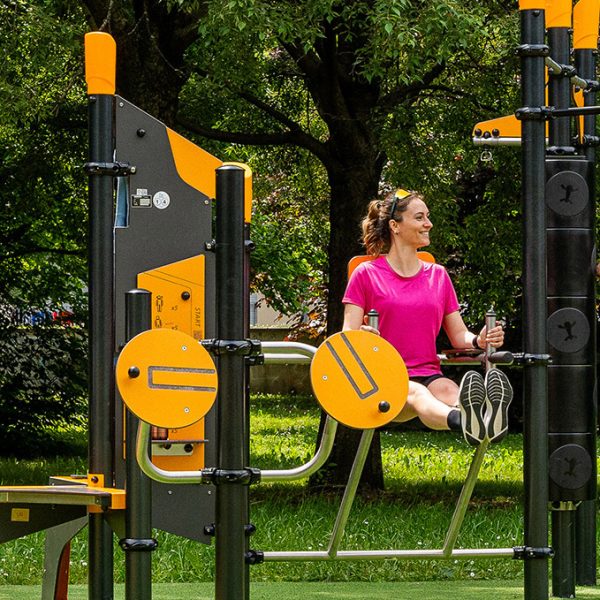
A fitness precinct near a sports club, university or major recreation reserve is a different brief. That audience is generally looking for calisthenics equipment, street workout stations, combination pull-up and dip units, and higher-intensity functional equipment that rewards regular use.
Most council projects sit somewhere between those two extremes, and a good specification makes that balance clear from the start. A council installing its first outdoor gym in a family-oriented reserve should generally lean toward multi-generational equipment, with only one or two pieces of higher-intensity equipment mixed in.
Compliance Snapshot: AS 16630 and How It Differs from Playground Standards
Outdoor fitness equipment in Australia is governed by AS 16630:2021, Permanently installed outdoor fitness equipment, safety requirements and test methods. It’s the Australian adoption of the European EN 16630:2015 standard, and it covers entrapment and crush points, fall height, movement space and safety clearances between stations, UV-resistant materials, and restrictions on treated timbers such as CCA and creosote.
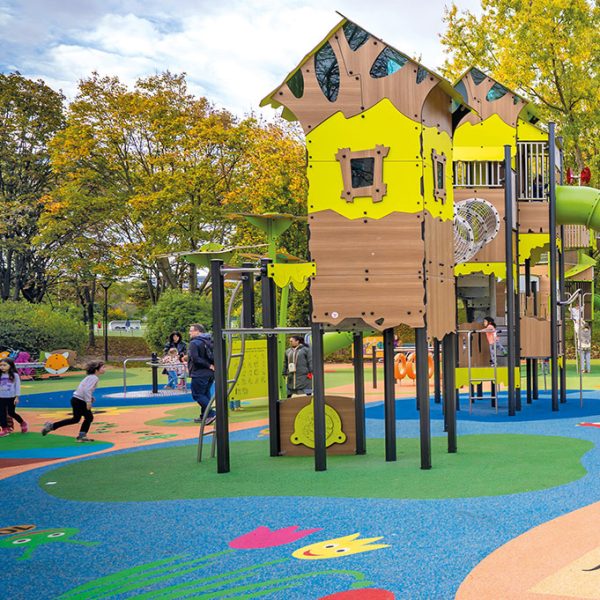
It’s a separate standard from AS 4685, which governs playground equipment for children. That distinction matters in practice, because many council projects combine a playground and a fitness zone in the same reserve, and the two need to be specified, installed and inspected against their own standards rather than treated as one project. Where impact-attenuating surfacing is required under either standard, AS 4422 covers the surfacing itself.
For a council procurement process, the practical takeaway is simple: ask any public outdoor gym supplier to confirm in writing that their outdoor fitness equipment is certified to AS 16630, and ask a playground supplier to confirm AS 4685 separately if the project includes both. A supplier manufacturing to the European baseline standards, EN 1176 for play equipment and EN 16630 for fitness equipment, is generally a good sign the Australian equivalents will be met too.
Activation Ideas: Getting Equipment Used
Good siting and the right equipment mix solve most of the usage problem, but activation is what finishes the job.
Clear signage showing which muscles each station works and how to use it properly matters more than it might seem, because it removes the biggest barrier a first-time user faces: not knowing where to start. QR codes linked to short instructional videos take this further, letting someone scan a code at the equipment and watch a demonstration on their phone on the spot, which is especially useful for stations that are a bit more involved than a simple bench press.
Councils get more out of a fitness precinct when they actively promote it rather than waiting for people to stumble across it. That could mean partnering with a local health organisation or the council’s own wellbeing team to run free classes on the equipment, timed around an event such as Community Health Week. Adding the precinct to council walking maps and active transport routes is another easy way to put it in front of people. Pairing it with a playground, sports field or shaded seating also turns a standalone gym into a destination the whole family will visit.
Case Study: How Proludic’s ACTI’Fit and ACTI’Street Ranges Suit Council Budgets and Maintenance Capacity
As an outdoor gym equipment supplier, Proludic developed the ACTI’FUN product line to solve exactly this problem: choosing the right products for a site based on who will use it and what the budget allows.
The ACTI’Fit range covers the broad, multi-generational brief. It combines adjustable resistance and static equipment for strength, cardio and functional training, suited to community parks catering to a wide range of ages and fitness levels, which is why it’s the range councils tend to choose when the goal is strong participation across the whole neighbourhood.
The ACTI’Street range is built for the fitness-focused side of the brief. It offers street workout and calisthenics equipment for bodyweight training, including combination units accessible to wheelchair users, and it’s certified by the World Street Workout and Calisthenics Federation, a credential that helps attract a dedicated training community to the precinct.
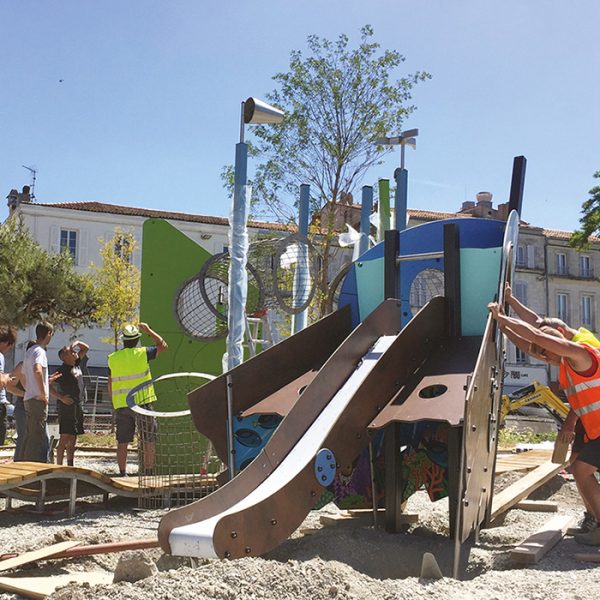
Because the range is modular, a council can start with a smaller ACTI’Fit installation and add ACTI’Street stations, or extend the ACTI’Fit footprint, in a later financial year without redesigning the site. Proludic also handles design, manufacture, project management, installation and maintenance, which matters for councils that own the asset for its full lifecycle: one point of contact for warranty, servicing and inspections. Every ACTI’FUN product is certified to AS 16630 and EN 16630, and Proludic holds ISO 9001 certification across its manufacturing, backed by more than 35 years’ experience designing play and fitness equipment for communities.
A Short Planning Checklist for Your Next Project
Run your project against this checklist before briefing suppliers and going to tender. It’s based on Sport and Recreation Victoria’s Guidelines for Planning, Installing and Activating Outdoor Fitness Equipment and on Play Australia’s guidance on outdoor fitness equipment, both of which are worth reading in full alongside this list.
- Have you identified the primary users (age group, fitness levels, accessibility) before choosing equipment?
- Is the location on an existing cycle or walking track, with passive surveillance and shade?
- Can a wheelchair or pram reach every piece of equipment?
- Have you mandated AS 16630 compliance (and AS 4685 separately where a playground is included) in the tender documentation?
- Do any of the pieces of equipment need impact-attenuating surfacing under AS 4422?
- Have you budgeted for signage, and ideally QR code instructional content, at the time of installation rather than later?
- Do you have a plan for activation, whether that’s a launch event, a community partnership, or adding the equipment to an active transport map, within the first three months?
- Has the supplier confirmed in writing what maintenance and inspections they’ll carry out, and when that responsibility transfers to the council?
- Is there room in the budget to expand the equipment mix in phases as usage data comes in?
Frequently Asked Questions
AS 16630:2021, Permanently installed outdoor fitness equipment, safety requirements and test methods, applies to equipment permanently installed in public areas. It’s a separate standard from AS 4685, which covers playground equipment.
Pricing varies widely depending on the number of stations, the equipment mix and the site works required, from a single station to a full multi-station precinct. Because so much depends on site-specific factors, the most accurate figure will come from a supplier’s quote based on your requirements.
Not always. Static, ground-based equipment rarely needs it. However, any equipment with moving parts, elevated use, or a fall risk may require impact-attenuating surfacing under AS 4422. A supplier complying with AS 16630 can confirm this station by station.
Site selection matters most: put it somewhere people already walk, near other park infrastructure, with shade and passive surveillance. Beyond that, clear signage, QR-linked instructions and an activation push in the first few months make a real difference.
Planning an Outdoor Fitness Space for Your Council?
Proludic designs, manufactures, installs and maintains outdoor fitness equipment for local government projects across Australia, from a single ACTI’Fit pod to a full multi-generational fitness precinct. Explore our range of outdoor fitness equipment or get in touch to talk through how we can help scope your project.
Planning an Outdoor Fitness Space for Your Council?
Proludic designs, manufactures, installs and maintains outdoor fitness equipment for local government projects across Australia, from a single ACTI’Fit pod to a full multi-generational fitness precinct. Explore our range of outdoor fitness equipment or get in touch to talk through how we can help scope your project.
More Tips from Experts
Playground Equipment Maintenance and Safety Inspections: An Australian Council’s Guide to Compliance
Article published on 17 September 2026
Somewhere on your council’s books right now sits a playground that was signed off five, ten, maybe fifteen years ago, and nobody’s given it a second thought since the ribbon was cut. That’s the problem. Sun, salt air, tree roots, and thousands of small hands and feet have been quietly working against it every single...
Playgrounds for Caravan Parks and Holiday Resorts: How to Choose Equipment That Survives Peak Season
Article published on 17 September 2026
A council playground has it easy, honestly. It sees the same familiar crowd of local families week after week, and kids who treat the equipment roughly the way they’d treat their own backyard gear, spread out fairly evenly across the whole year. A caravan park or holiday resort playground lives a completely different life. It...


