
Key considerations when designing play areas for children with sensory disability
1 – Understand their needs
Children with sensory disability may:
- Have difficulty finding their way around outdoor spaces
- Experience balance or coordination challenges
- Find it harder to engage in group play without the right supports
2 – Support their needs
Inclusive playspaces should offer:
- Spatial landmarks for easy orientation
- Barrier-free access to all equipment
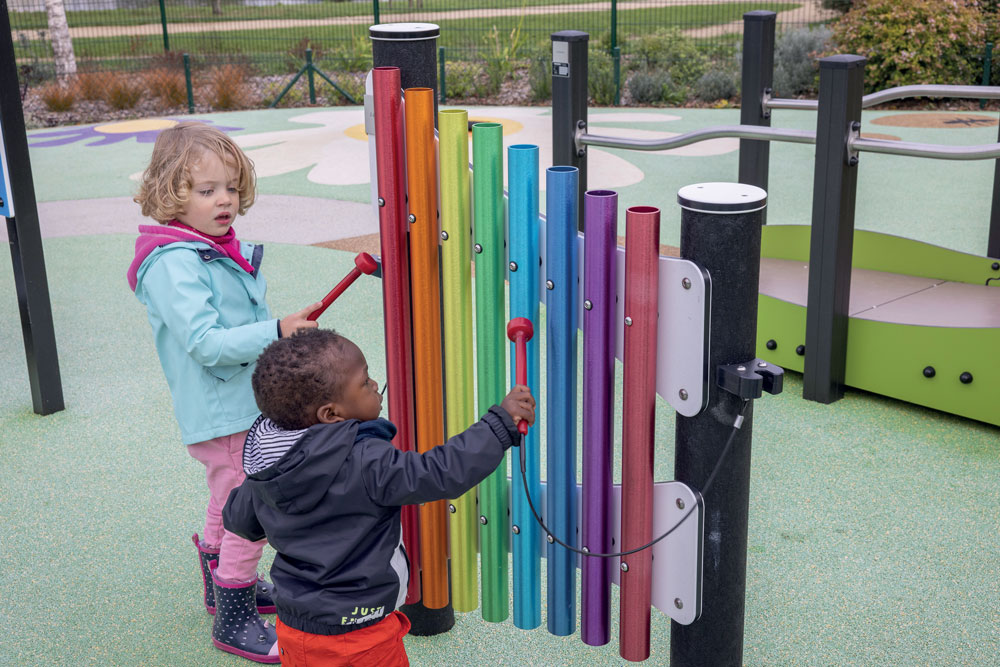
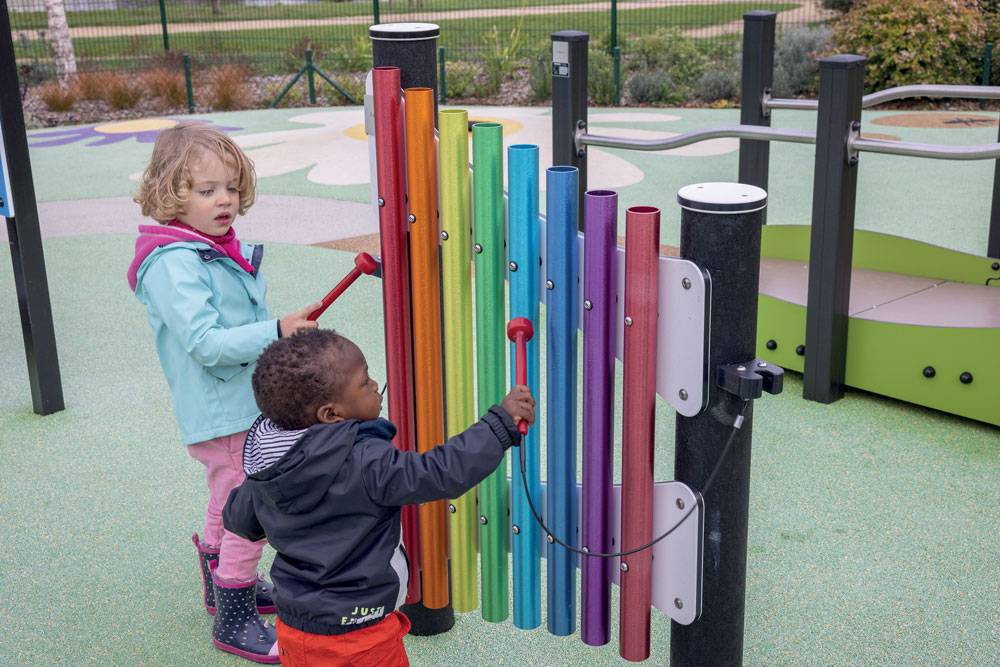
- Sensory-rich experiences (e.g. movement, touch, sound) that support engagement and development
3 – Inclusive design solutions
- Play equipment that stimulates sight, sound, and touch
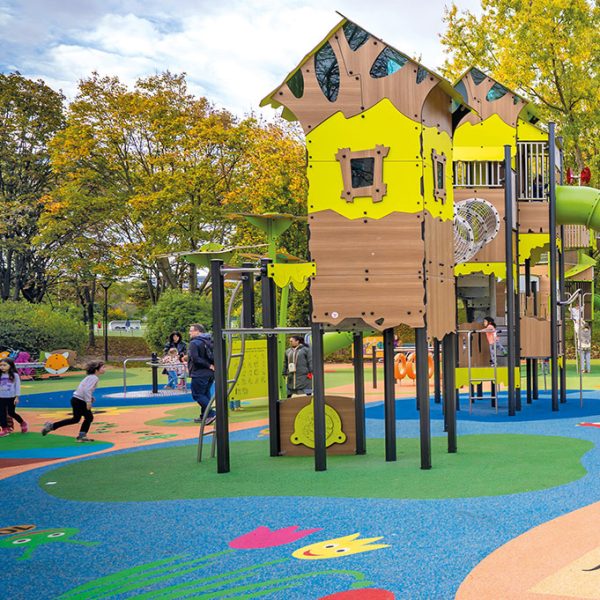
- Colour-coded and tactile pathways to guide navigation
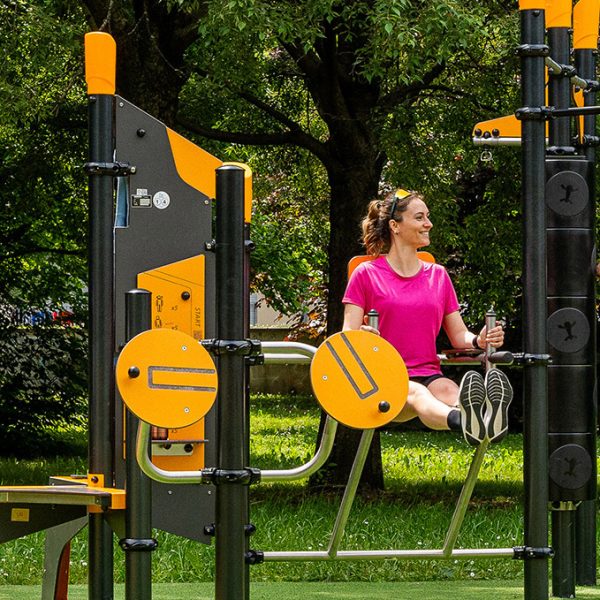
- Structures that promote balance, spatial awareness, and social interaction
Examples of inclusive play equipment for children with sensory disability
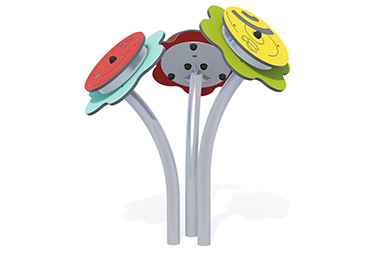
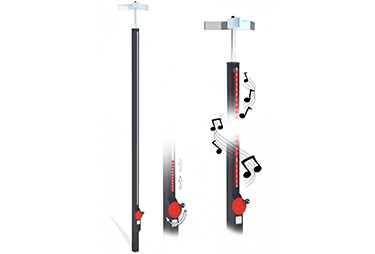
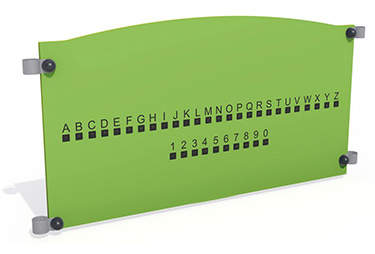
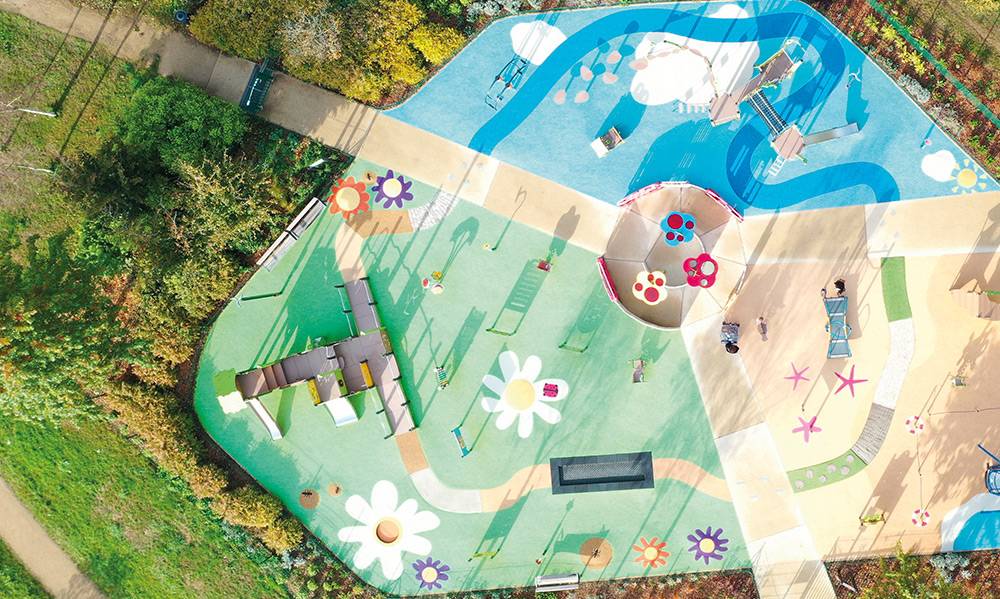
Our inclusive design solutions include :
- Tactile ground indicators: Textured surfaces guide children safely through the space
- Well-spaced equipment: Allows for smooth and confident movement
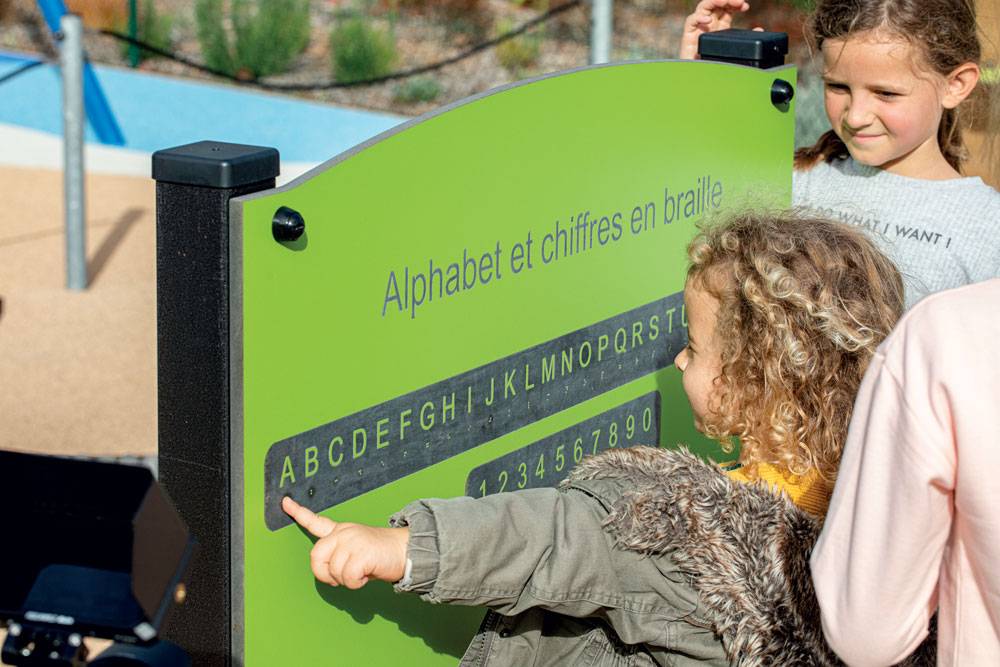
- Accessible signage: Visual and tactile cues to help children navigate and support independence