
Article published on 1 September 2026
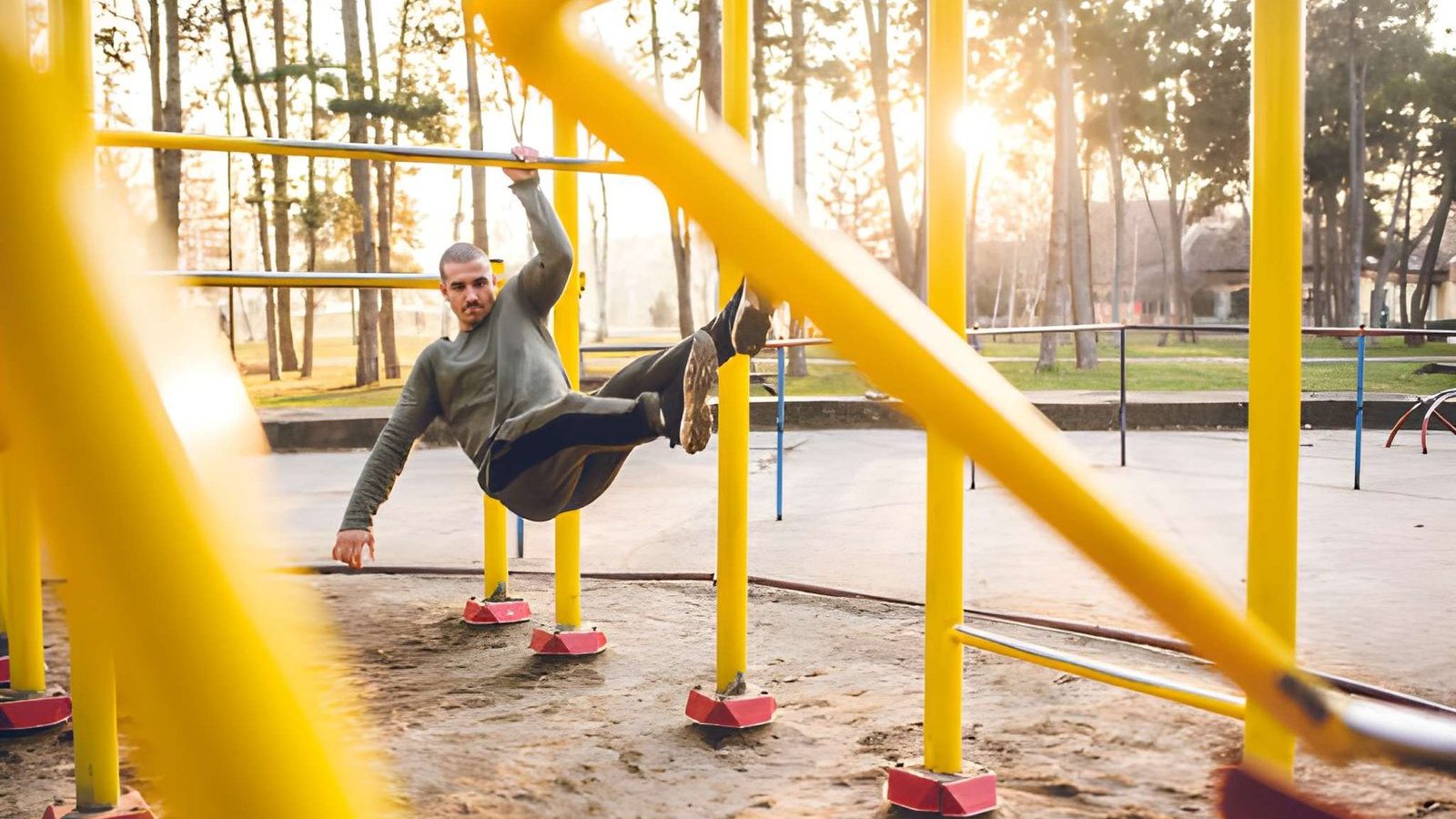
Most public playgrounds are built for primary-school-aged kids, which leaves a gap for tweens and teens who’ve outgrown the swings but aren’t ready for a gym membership. That’s the gap commercial parkour equipment fills: ninja and parkour courses have become the fastest-growing category of outdoor play equipment for that age group.
This guide is for councils and schools weighing up commercial parkour equipment or a ninja course. It covers the core elements that make up the equipment, the safety and compliance standards that apply to obstacle equipment, how to tier a course by ability, and where Proludic’s ACTI’Ninja range fits within a broader outdoor fitness zone.
Why Ninja and Parkour Are the Fastest-Growing Category for Teen Park Use
Traditional playgrounds are built around junior and senior age brackets that stop well short of the teenage years. Once a child ages out of that bracket, there’s usually nothing left for them at the local park, which lines up with the well-documented drop in activity levels through adolescence.
Ninja and parkour circuits fill that gap because they don’t need a team, a coach or a booking. Participants can turn up alone, work through a circuit at their own pace, and push themselves against the timer panel or a harder path through the same obstacles. The category has also had a real boost from the popularity of ninja warrior TV shows and the growing profile of parkour as its own sport, both of which make these courses an easier concept for councils to promote.
For a council, there’s a second benefit beyond participation numbers: a well-used ninja circuit gives an otherwise underused age group a genuine reason to be in the reserve, which tends to mean less antisocial behaviour in that space.
Core Elements of a Commercial Ninja or Parkour Course
A commercial ninja course is a modular system of pieces you configure to suit the site, not a single fixed structure. The main types include:
- Rope climbs and cargo nets for grip and upper-body endurance.
- Balance beams, slacklines and wobbly bridges for core stability and proprioception.
- Monkey bars and monkey bar archways for grip endurance and continuous swinging movement.
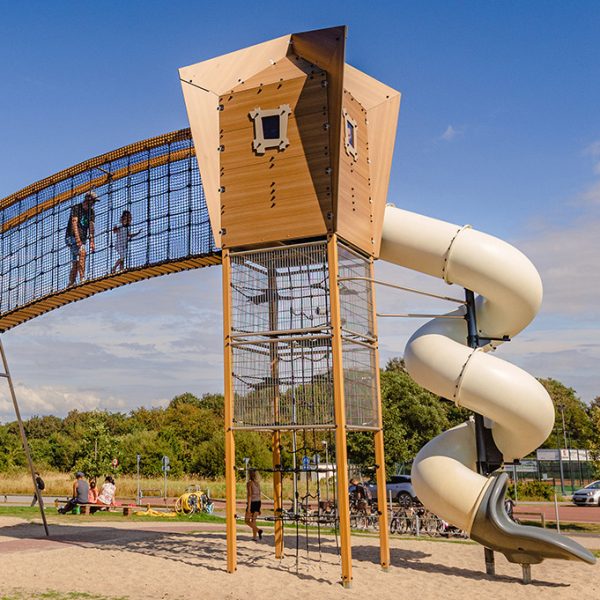
- Stopwatch stations and timed circuits that add a game element, letting confident users push themselves against the clock without needing harder fixed obstacles.
- Warped walls, vaults and true parkour structures for wall-running and vaulting.
- Weave poles and shuffle obstacles for agility and lateral movement.
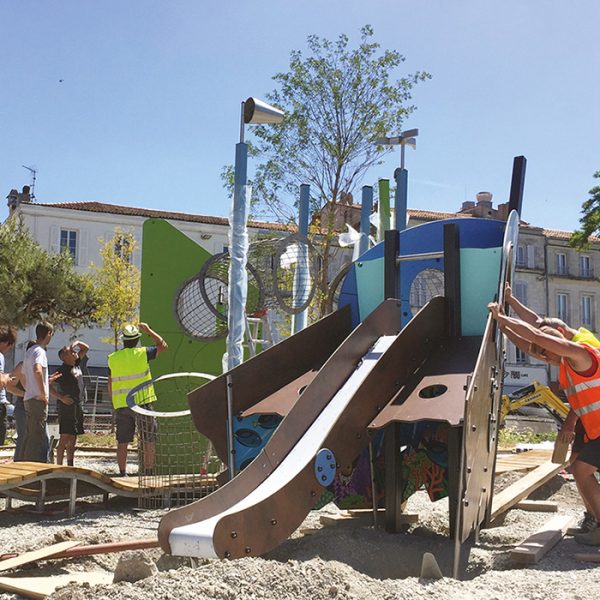
Because these pieces are modular, they can be laid out as a one-way circuit from start to finish, or as a loop that returns to the starting point. That modularity matters most for a council or school planning its budget in stages, since stations can be added later without redesigning what’s already there.
Safety and Fall-Zone Design Considerations for Obstacle-Style Equipment
Obstacle-style equipment is where a lot of generic playground advice falls short, because a single ninja or parkour project can cross three different Australian Standards depending on exactly what’s installed.
- Modular obstacle stations with a defined free-fall height, monkey bar archways, wobbly bridges, and climbing nets are generally specified and installed under AS 4685, the playground equipment and surfacing series, with impact-attenuating surfacing sized to each station’s fall height under AS 4422.
- True parkour equipment, meaning installations designed for free movement across walls, rails and terrain rather than fixed play stations, is covered by its own standard: AS EN 16899:2020, Sports and recreational equipment, Parkour equipment. It sets requirements for area, height, flow and separation from other facilities, including children’s playgrounds and multi-use games areas, and it’s written for users aged 8 and up.
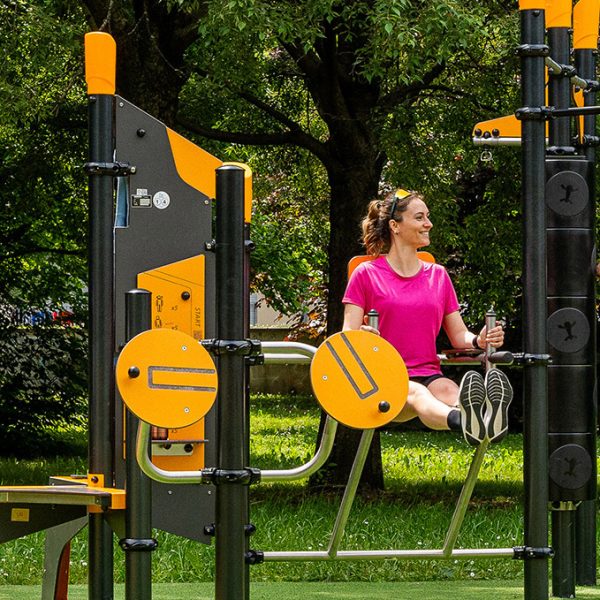
- Where a course blends in calisthenics-style stations, pull-up bars and dip stations, some elements may instead sit under AS 16630, the outdoor fitness equipment standard.
The practical implication for councils and schools: don’t assume one blanket compliance certificate covers an entire ninja or parkour course. Ask the supplier to confirm which standard applies to each station, request impact-attenuating surfacing costs for every element with a fall-height risk, and check that the layout allows adequate separation and flow between fast-moving obstacle elements and static infrastructure such as seating, paths and standard playground equipment.
Age and Skill Tiering: Designing for Beginners and Confident Climbers
A course built only for confident climbers gets ignored just as fast as one that’s too easy to hold anyone’s interest. The most commercially successful ninja courses grade their difficulty deliberately.
Easier obstacles, such as low balance beams, stepping pads and simple crossings, tend to sit at the start of the circuit, with harder ones like monkey bars or warped walls further along. A bypass option lets a less confident participant skip a tougher obstacle without holding up the group behind them, which matters for schools, where one class can span a wide range of abilities. Timer and stopwatch elements give confident users another way to push themselves without needing extra permanent obstacles.
Accessibility deserves just as much thought as the physical challenges themselves. A well-designed inclusive range lets a wheelchair user and an able-bodied participant start at the same line and work through the same obstacles side by side, rather than routing one group around the edge.
Spotlight: Proludic’s ACTI’Ninja Range Within a Broader ACTI’FUN Fitness Precinct
Proludic’s ACTI’Ninja range is commercial ninja warrior playground equipment built from linkable obstacle modules: monkey bar archways, wobbly bridges, slalom ninja trails, tube and tunnel obstacles, slacklines and stopwatch panels, all of which join together into a one-way course or a loop. Difficulty comes from which modules you choose rather than a fixed layout, so a school or council can start with beginner-friendly modules and add harder ones in a later stage once the course proves popular.
Every obstacle carries a QR code linking to instructions for that activity. Inclusivity is built into the range by default: wheelchair users and able-bodied participants start from the same line and work through the same obstacles according to their own ability, rather than being split onto separate routes.
As a manufacturer rather than a reseller, Proludic designs and builds the ACTI’Ninja range in-house, and it carries the same certification as the rest of the ACTI’FUN family: ISO 9001 certified manufacturing and EN 1176/EN 16630 compliance, the European standards the Australian equivalents are based on. That means one point of contact for warranty, maintenance and compliance inspection across the whole range.
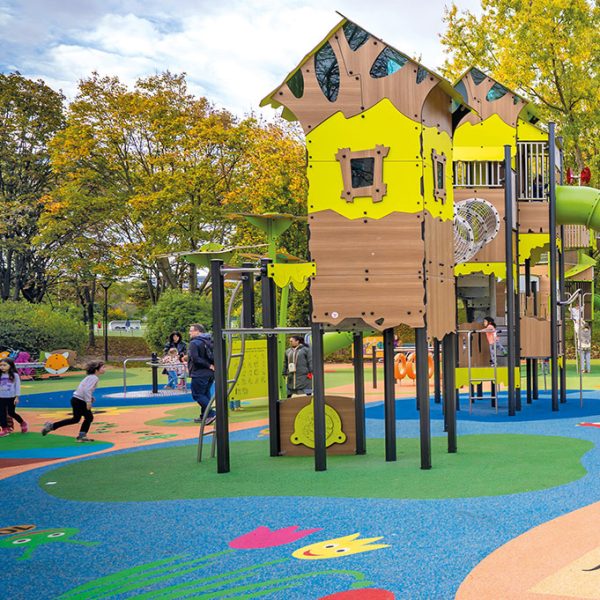
ACTI’Ninja is also designed to sit inside a wider ACTI’FUN precinct rather than stand alone, so a single reserve can combine playground equipment, ACTI’Ninja and either ACTI’Fit or ACTI’Street as one integrated project.
A Short Planning Checklist for Councils and Schools
Run through this before briefing a supplier or going to tender on a ninja or parkour proposal:
- Have you settled on a target age range (upper primary, secondary or open community) and matched the obstacle mix to it?
- Does the design mix entry-level obstacles with advanced ones, with a bypass route around the harder stations?
- Have you confirmed which standard applies to each obstacle: AS 4685 for modular obstacle stations, AS EN 16899 for parkour-specific installations, or AS 16630 where calisthenics stations are included?
- Have you budgeted for impact-attenuating surfacing on every station with a fall-height risk, as required under AS 4422?
- Is there enough separation and flow between the ninja/parkour installation and the rest of the park, such as playgrounds, walking paths and seating?
- Does the layout include an accessible entry point so people using mobility aids can take part alongside everyone else?
- Is there signage or QR-coded instructions so first-time users know how to approach each obstacle?
- Does the supplier manufacture in-house and provide certification for each individual station, rather than one blanket certificate?
- Have you built staged expansion into the budget so harder stations can be added later if the facility proves popular?
Frequently Asked Questions
Ninja playground equipment, or ninja trails, is made up of modular obstacle stations, monkey bars, balance beams, cargo nets and similar obstacles configured into a set circuit under standard playground rules. Parkour equipment, regulated separately under AS EN 16899, allows for freer movement across walls, rails and terrain and is intended for users aged 8 and up.
Depending on the equipment used, a course may need to comply with AS 4685, AS EN 16899:2020 and AS 16630. Ask your supplier to confirm which standard each part of your course meets, rather than assuming one certificate covers everything.
Modular ninja trail obstacles suit school-aged kids through to teens, with difficulty set by the modules and layout you choose. Equipment built specifically for parkour under AS EN 16899 is intended for users aged 8 and up, which makes it well suited to tweens, teens and young adults.
Yes. Ninja and parkour obstacles can be added to an existing playground or built as a stand-alone installation, and modules can be swapped or upgraded later without rebuilding the whole course.
Planning a Ninja or Parkour Course for Your Council or School?
Proludic designs, manufactures, installs and maintains ninja and parkour equipment for councils and schools across Australia, from a single obstacle addition to a full ACTI’FUN fitness precinct. Explore the ACTI’Ninja range, or see how we work with schools and local governments to start scoping your project.
Modular ninja trail obstacles suit school-aged kids through to teens, with difficulty set by the modules and layout you choose. Equipment built specifically for parkour under AS EN 16899 is intended for users aged 8 and up, which makes it well suited to tweens, teens and young adults.
Yes. Ninja and parkour obstacles can be added to an existing playground or built as a stand-alone installation, and modules can be swapped or upgraded later without rebuilding the whole course.
Planning a Ninja or Parkour Course for Your Council or School?
Proludic designs, manufactures, installs and maintains ninja and parkour equipment for councils and schools across Australia, from a single obstacle addition to a full ACTI’FUN fitness precinct. Explore the ACTI’Ninja range, or see how we work with schools and local governments to start scoping your project.
More Tips from Experts
Playground Equipment Maintenance and Safety Inspections: An Australian Council’s Guide to Compliance
Article published on 17 September 2026
Somewhere on your council’s books right now sits a playground that was signed off five, ten, maybe fifteen years ago, and nobody’s given it a second thought since the ribbon was cut. That’s the problem. Sun, salt air, tree roots, and thousands of small hands and feet have been quietly working against it every single...
Playgrounds for Caravan Parks and Holiday Resorts: How to Choose Equipment That Survives Peak Season
Article published on 17 September 2026
A council playground has it easy, honestly. It sees the same familiar crowd of local families week after week, and kids who treat the equipment roughly the way they’d treat their own backyard gear, spread out fairly evenly across the whole year. A caravan park or holiday resort playground lives a completely different life. It...


