
Article published on 31 October 2026
An inclusive playground is not simply one with a ramp and a wheelchair accessible swing bolted on at the edge. Genuine inclusion means a child using a wheelchair, a child who is autistic, a child with low vision and a child with no disability at all can play the same games, in the same space, at the same time. That is the standard Proludic designs to: creating playspaces and outdoor fitness areas where everyone can thrive, develop their skills and improve their wellbeing, where all children have access to play the same games together.
This guide covers what makes a playground genuinely inclusive rather than just accessible, the areas of need a well designed inclusive playspace should address, the standards and guidelines behind inclusive design in Australia, and how councils, schools, childcare services and tourism operators can plan one for their own community.
What Makes a Playground Genuinely Inclusive, Not Just Accessible
Accessibility and inclusion are related but not the same thing. An accessible playground lets a child with disability enter the space, perhaps via a ramp or a firm, level path. An inclusive playground goes further, designing the play experience itself so that children of different abilities are playing together rather than alongside each other. That distinction matters for councils, schools and childcare services specifying a new playground, because a design that only meets minimum access requirements can still leave children with disability watching from the sidelines. Inclusive design builds shared play value into the equipment itself, not just the path leading to it.
The Areas of Need Inclusive Design Should Address
Proludic’s inclusive design approach, developed with universal design specialists, healthcare professionals and disability associations, is built around several distinct areas of need, each of which calls for different design responses.
Physical disability. Structures should encourage motor development through motion while incorporating wide seats, handrails and anti-tilt areas for children with reduced mobility or dexterity.
Vision impairment. Bright primary colours support motor development and orientation, while tactile indicators, Braille signage and textured surfaces help with navigation and spatial understanding.
Hearing disability. Visual cues and clearly legible equipment replace reliance on auditory instructions, with colour used to signal safety information that might otherwise be communicated by sound.
Intellectual disability. Simple shapes, logical layouts and multi-level difficulty within the same piece of equipment support children at different developmental stages while keeping the space easy to supervise.
Autism spectrum. Design incorporates clear visual cues, a single obvious entrance and exit, colour separation between zones, and quiet recovery spaces, supporting children who benefit from routine, predictability and reduced sensory competition.
Standards and Guidelines Behind Inclusive Playground Design in Australia
Inclusive playground design in Australia sits on top of the same core safety standards that apply to any commercial playground, EN1176 and EN16630 for equipment safety, plus AS 4685 for Australian installations, alongside accessibility requirements drawn from Australian access standards for the built environment. State guidance also exists, such as South Australia’s Inclusive Play Guidelines, which set out practical benchmarks for accessible playspaces. It is worth noting that individual NDIS plans do not typically fund public playground equipment itself, since a playground is community infrastructure rather than an individual’s assistive technology. What NDIS participants and their families do need is genuinely accessible public play spaces in their own community, and councils, schools and childcare services are increasingly expected to deliver exactly that when planning new or upgraded playgrounds.
Key Equipment and Design Elements for Inclusive Playgrounds
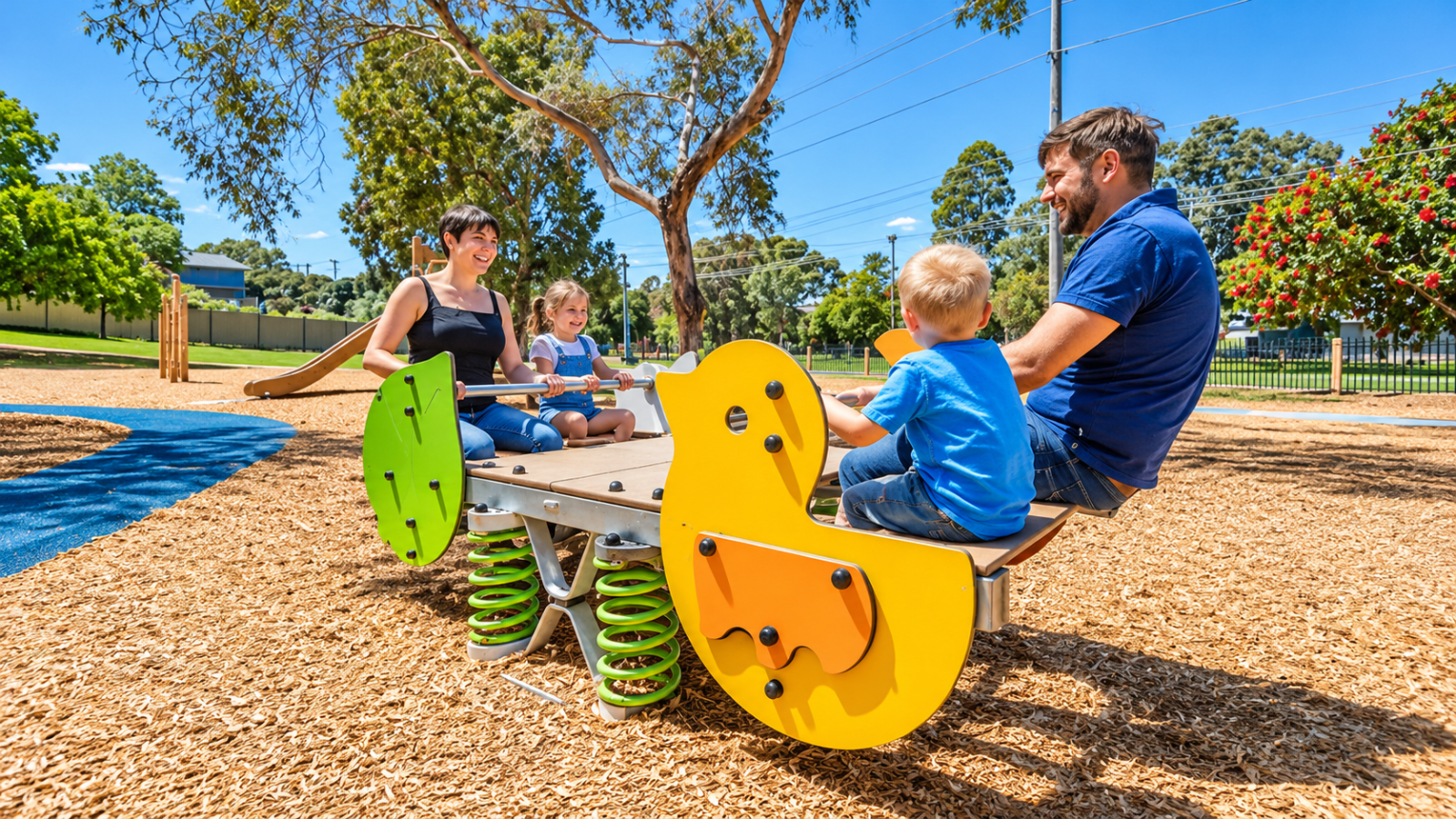
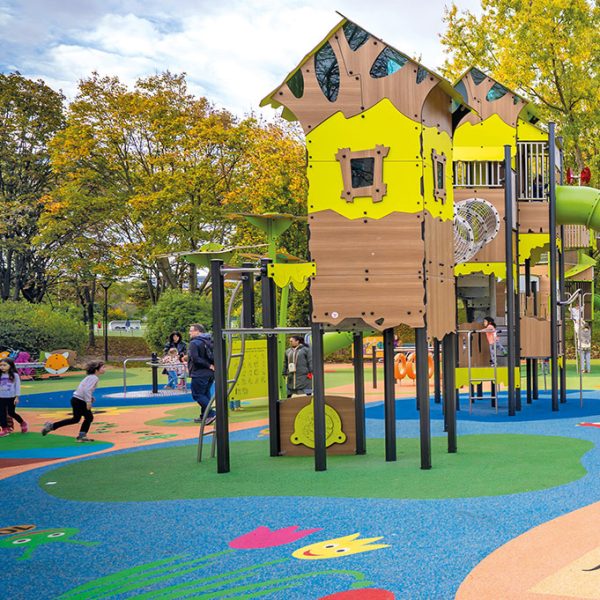
A genuinely inclusive playspace usually combines several design elements working together rather than a single accessible feature. Ground level and elevated play are integrated so children of all mobility levels can move through the same structure, supported by ramped access rather than steps alone. Inclusive swings, transfer platforms and inclusive roundabouts allow children who use a wheelchair or have limited mobility to take part in the play equipment other children are already using, rather than being offered a separate, isolated piece of equipment. Sensory play panels, musical elements, tactile and water or sand play give children with sensory processing needs meaningful ways to engage. Wide, firm, accessible pathways and compliant soft fall surfacing make the whole space navigable, not just the entrance. Shade, seating and quiet or calm zones give children and carers somewhere to rest and regulate, which matters as much to a genuinely inclusive design as the play equipment itself. You can see these principles applied in our inclusive play equipment inspiration gallery and inclusive playground layout concepts.
How Proludic Assesses and Designs Inclusive Play Spaces
Proludic has been designing inclusive play and fitness spaces for more than 35 years, working alongside universal design specialists, healthcare professionals and disability associations to develop genuinely inclusive solutions rather than a checkbox add-on. For councils, schools and organisations planning a new or upgraded playground, our Inclusive Play Area Diagnosis service assesses an existing or proposed play space against universal design principles, identifying strengths and specific opportunities to improve accessibility and inclusion, whether you are starting from scratch or reviewing a playground that already exists.
Inclusive Playgrounds for Councils, Schools, Childcare and Tourism Operators
Every sector Proludic works with has its own reasons to prioritise inclusive design. Local government and council playgrounds serve the whole community and are increasingly assessed against social inclusion outcomes as part of open space strategy. Schools have a duty to give every enrolled student equal access to play and recess. Childcare and early learning services are expected to meet the outdoor space requirements of the National Quality Framework in a way that includes children of all abilities from the earliest years. Caravan parks and holiday resorts increasingly market accessible facilities as a genuine point of difference for families and guests who might otherwise avoid a destination that cannot accommodate them.
Frequently Asked Questions
What is the difference between an accessible playground and an inclusive playground?
An accessible playground meets minimum requirements for children with disability to enter and move through the space, such as ramps and firm pathways. An inclusive playground goes further, designing the equipment itself so children of different abilities can play the same games together, not just occupy the same space.
What standards apply to inclusive playground equipment in Australia?
Inclusive playground equipment must meet the same core safety standards as any commercial playground, including EN1176 and EN16630 for equipment safety and AS 4685 for Australian installations, alongside accessibility benchmarks drawn from Australian access standards and, in some states, dedicated inclusive play guidelines.
Can an existing playground be retrofitted to be more inclusive, or does it need to be replaced entirely?
In many cases, yes. Adding inclusive swings, sensory elements, ramped access or improved surfacing to an existing playspace can significantly improve its inclusion without a full replacement. An Inclusive Play Area Diagnosis is the best starting point to identify which upgrades will have the most impact for your site and budget.
How do I start planning an inclusive playground for my council, school or centre?
Start with a site assessment and a conversation with an experienced inclusive play supplier about your community’s needs, age range and budget. Contact Proludic’s team to arrange an Inclusive Play Area Diagnosis and an initial concept design.
Start Designing a Genuinely Inclusive Playspace
Every child deserves the chance to play, not just to be present. If you are planning a new playground or reviewing an existing one, Proludic’s play and project consultants can help you design a space where children of all abilities play together, not apart. Call us on 1300 800 181 or get in touch online to book an Inclusive Play Area Diagnosis or start your concept design.
More Tips from Experts
Understanding Playground Safety Certifications: ISO 9001, EN 1176, EN 16630 and AS 4685 Explained
Article published on 7 November 2026
Every commercial playground supplier in Australia says its equipment is safe and compliant. For a council procurement officer, landscape architect or school business manager, the challenge is knowing what those claims mean and how to check them before a contract is signed. This guide explains the main standards and certifications that apply to commercial playground...
Playground Shade and Surfacing: Preparing Play Spaces for the Australian Summer
Article published on 7 November 2026
A playground that is too hot to touch is a playground nobody uses. On a typical Australian summer day, unshaded equipment and dark surfacing can reach temperatures that burn skin in seconds, and UV levels are high enough to cause sunburn well before lunch. Getting shade and surfacing right is what keeps a play space...


